| Supply chain management (SCM) is the coordination and oversight of all activities involved in producing and delivering a product — from sourcing raw materials through manufacturing, warehousing, transportation, and delivery to the end customer. The goal of supply chain management is to get the right product to the right place at the right time at the lowest possible total cost. In 2026, supply chain management has expanded beyond operational efficiency to include resilience planning, geopolitical risk management, and technology integration — as the COVID-19 pandemic, Suez Canal blockage, Red Sea crisis, and US tariff volatility have demonstrated how quickly global supply chains can break. |
| WHAT IS A SUPPLY CHAIN |
What Is a Supply Chain — And What Does Managing It Actually Mean?
A supply chain is the complete network of people, companies, resources, activities, and technologies involved in creating a product and delivering it to a customer. It starts with raw materials — iron ore in a mine, cotton in a field, lithium in a deposit — and ends with a finished product in a customer’s hands. Everything in between is the supply chain.
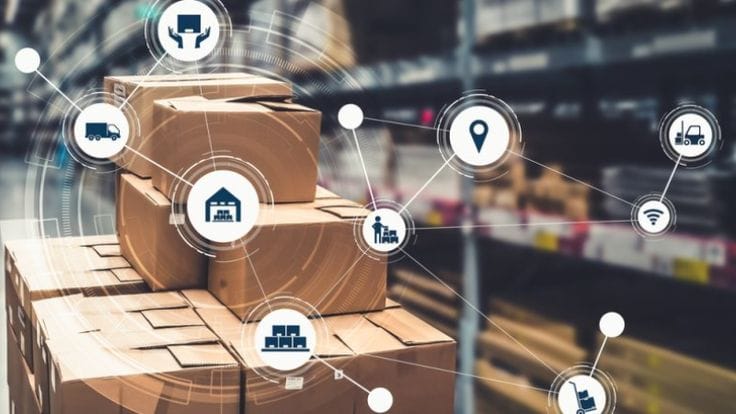
Managing a supply chain means making decisions and creating systems to optimize each link in this chain. When does the manufacturer order raw materials? Which shipping line carries the finished goods? Which warehouse do products flow through before reaching the customer? How much inventory should be held at each stage to buffer against disruption? These decisions — made millions of times per day across global commerce — are what supply chain management involves.
Poor supply chain management costs businesses money through excess inventory, stockouts, expediting costs, quality failures, and customer service failures. In 2021, supply chain disruptions cost the global economy an estimated $4 trillion. In 2026, the combination of US tariff volatility, Red Sea shipping disruptions, and post-pandemic inventory normalization has made supply chain management more strategically important than at any point in the last 30 years.
| $4T Cost of supply chain disruptions 2021 Global estimate — COVID, Suez, chip shortages | 73% B2B buyers research supply chain online Before engaging a vendor or logistics partner | 9.1% Annual growth — global logistics market $1.26T in 2025, projected $2.5T by 2033 |
| THE 5 COMPONENTS |
The 5 Core Components of Supply Chain Management
1. Planning
Supply chain planning involves forecasting demand, planning production, and aligning inventory levels with expected sales. A manufacturer that produces too much creates excess inventory costs. One that produces too little creates stockouts and lost sales. Planning uses historical data, market trends, and increasingly in 2026, AI-powered forecasting tools to balance these risks. Poor planning is the root cause of most supply chain failures — the pandemic-era inventory mismatches (too little in 2021, too much in 2022) cost retailers and manufacturers billions.
2. Sourcing
Sourcing is the selection and management of suppliers who provide the materials, components, and services that go into a product. Supply chain managers evaluate suppliers on price, quality, reliability, lead time, and increasingly in 2026, geopolitical risk. The US tariff environment has accelerated supplier diversification — companies that sourced exclusively from China are restructuring to include Vietnam, India, Mexico, and other lower-tariff origins. Sourcing decisions made in 2024 and 2025 are determining competitive positions in 2026.
3. Manufacturing
Manufacturing is the transformation of raw materials and components into finished goods. Supply chain management at this stage involves production scheduling, quality control, capacity planning, and managing the logistics of getting materials in and finished goods out. Manufacturing decisions — where to produce, in what volumes, on what schedule — are increasingly being made with supply chain resilience as a primary consideration alongside cost.
4. Delivery and Logistics
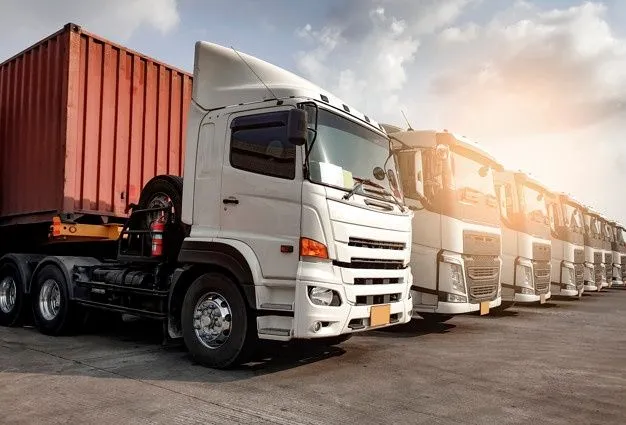
This is where freight forwarders, 3PLs, trucking carriers, and logistics technology companies operate. Getting finished goods from the factory to the customer involves ocean freight, air freight, road transport, warehousing, order fulfillment, last-mile delivery, and returns processing. The logistics component of supply chain management is where most of the cost and variability lives — and where disruptions (port strikes, shipping line capacity constraints, fuel price spikes) have the most immediate impact.
5. Returns (Reverse Logistics)
Returns management — getting products back from customers, assessing their condition, and either restocking, refurbishing, or disposing of them — is the least glamorous part of supply chain management and among the most expensive. E-commerce return rates of 20-30% mean that reverse logistics is a significant cost component for most consumer brands. Supply chain management includes designing returns processes that minimize cost and maximize recovery value from returned inventory.
| WHY SUPPLY CHAINS BREAK |
Why Supply Chains Break — The 6 Most Common Failure Points
| Failure Type | What Causes It | Real Example | Prevention |
| Demand shock | Sudden unexpected surge or collapse in demand | COVID-19 — toilet paper, hand sanitizer stockouts 2020 | Flexible sourcing, distributed inventory, safety stock |
| Supplier failure | Key supplier cannot deliver — financial, quality, or capacity issue | 2021 Texas freeze — chip plants offline, auto production halts | Dual sourcing, supplier financial monitoring |
| Transportation disruption | Carrier capacity collapse, port congestion, route closure | Ever Given Suez blockage 2021 — $9.6B/day trade disrupted | Alternative routing plans, carrier diversification |
| Geopolitical events | Trade policy changes, conflict, sanctions | US tariffs 2018-2026 — China supply chain restructuring | Origin diversification, tariff monitoring |
| Natural disasters | Floods, earthquakes, storms disrupting production | 2011 Japan earthquake — Toyota production halted globally | Geographic diversification, business continuity planning |
| Cybersecurity attack | Systems taken offline by ransomware or breach | Merck cyberattack 2017 — $1.3B insurance claim | IT resilience, backup systems, supplier vetting |
| 2026 SUPPLY CHAIN LANDSCAPE |
What Is Happening in Supply Chain Management in 2026
The supply chain environment in 2026 is being shaped by four simultaneous forces that are forcing companies to fundamentally rethink their logistics strategies. First, the US tariff environment — with IEEPA tariffs ending after the March 2026 Supreme Court ruling but Section 301 tariffs on Chinese goods remaining — is accelerating sourcing restructuring toward Vietnam, India, and Mexico. Second, the Strait of Hormuz crisis is pushing Asia-Europe ocean freight onto Cape of Good Hope routings, adding costs and transit time to trades that pass through the Persian Gulf. Third, AI-powered supply chain planning tools are moving from experimental to operational across leading companies. Fourth, nearshoring and reshoring are accelerating as companies prioritize supply chain resilience over pure cost optimization.
For logistics companies — freight forwarders, 3PLs, trucking carriers, customs brokers — these disruptions are creating both pressure and opportunity. Companies that can navigate the new tariff landscape, offer alternative routing through the Suez disruption, and demonstrate technology integration are winning business from shippers restructuring their supply chains. Companies that cannot adapt are losing it.
| Logistics companies that build organic search visibility for the supply chain terms their ideal clients search — ‘freight forwarder Vietnam to USA,’ ‘customs broker tariff compliance,’ ‘3PL for nearshoring’ — are capturing the clients who are restructuring their supply chains right now. Rankpy builds this content for logistics companies. Free audit at rankpy. |
FAQ
FAQs about Supply Chain Management
Looking to learn more about SEO solutions for your business? Browse our FAQs:
Supply chain management (SCM) is the coordination of all activities involved in producing and delivering a product — from sourcing raw materials through manufacturing, transportation, warehousing, and delivery to the end customer. The goal is to get the right product to the right place at the right time at the lowest possible total cost while managing risk. Supply chain management decisions include supplier selection, production planning, inventory management, logistics network design, and returns processing. |
A supply chain manager oversees the planning, sourcing, manufacturing, logistics, and returns processes that move products from raw materials to customers. Day-to-day responsibilities include demand forecasting, inventory management, supplier performance monitoring, logistics cost management, disruption response, and technology implementation. In 2026, supply chain managers are also responsible for geopolitical risk management — monitoring tariff changes, trade lane disruptions, and supplier country risk. |
Logistics is a component of supply chain management — specifically, the planning and execution of the movement and storage of goods. Supply chain management is the broader discipline that includes logistics plus supplier management, demand planning, manufacturing coordination, and customer service. Logistics asks ‘how do we move this product?’ Supply chain management asks ‘how do we design and operate the entire system that creates and delivers this product at lowest total cost?’ |
Supply chain disruptions are caused by demand shocks (unexpected surges or collapses in demand), supplier failures, transportation disruptions (port strikes, route closures, carrier capacity issues), geopolitical events (tariff changes, conflict, sanctions), natural disasters, and cybersecurity attacks. The most significant supply chain disruptions of recent years — COVID-19, the Suez Canal blockage, the 2026 Strait of Hormuz crisis, and US tariff volatility — all fall into these categories. |
Supply chain management is important because it directly determines a company’s costs, service quality, and competitive position. Poor supply chain management results in excess inventory costs, stockouts that lose sales, quality failures, slow delivery that loses customers, and vulnerability to disruptions that competitors have planned for. Supply chain disruptions cost the global economy an estimated $4 trillion in 2021 alone. Companies that manage supply chains well consistently achieve lower costs, faster delivery, and higher customer satisfaction than those that do not. |