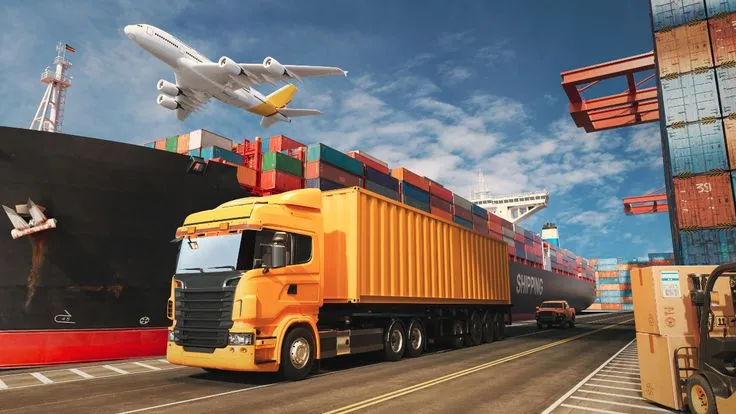
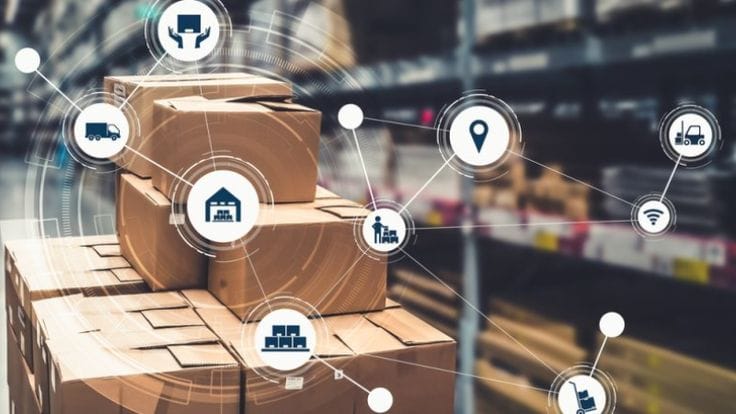
A 3PL (third-party logistics provider) is a company that handles some or all of a business’s logistics operations — including warehousing, order fulfillment, shipping, inventory management, and returns processing. E-commerce brands, manufacturers, and retailers use 3PLs to outsource their supply chain rather than building and managing their own warehouse, carrier relationships, and fulfillment operations. The global 3PL market was valued at $1.26 trillion in 2025 and is projected to reach $2.5 trillion by 2033, growing at 9.1% annually. In 2026, 82% of shippers report that using a 3PL contributes to improved customer service, and 66% say it reduces overall logistics costs.
THE BASICS
What Does 3PL Stand For — And What Does a 3PL Actually Do?
3PL stands for third-party logistics. The ‘third party’ refers to the fact that this company is separate from both the seller (first party) and the buyer (second party). When you buy something from an online store and the product ships from a warehouse you have never heard of — that is a 3PL working behind the scenes on behalf of the retailer.
A 3PL takes on the physical and operational work of moving products from manufacturer to customer. This includes receiving inventory from suppliers, storing it in a warehouse, picking and packing individual orders, shipping them through carrier networks, and processing returns when customers send products back. Some 3PLs also handle customs clearance, freight forwarding, transportation management, and last-mile delivery.
The essential distinction is this: a 3PL manages logistics so businesses can focus on their core work — building products, acquiring customers, and growing revenue — without dedicating capital and management attention to warehouse leases, packing operations, and carrier negotiations.
$1.26TGlobal 3PL market size 2025 Growing to $2.5T by 2033 at 9.1% CAGR
82%Shippers report improved customer service 2025 Annual Third-Party Logistics Study
66%Shippers report reduced logistics costs When using a 3PL vs in-house operations
HOW IT WORKS
How 3PL Logistics Works — Step by Step
1
You Send Inventory to the 3PL Warehouse You ship your products — from your manufacturer, your own facility, or an import shipment — to the 3PL’s warehouse. The 3PL receives your goods, checks for damage, logs inventory quantities, and assigns storage locations. This is called receiving or inbounding.
2
The 3PL Stores Your Inventory Your products sit in the 3PL’s warehouse, organized by SKU, size, expiry date, or whatever your product requires. You are charged storage fees — typically by the pallet, by the cubic foot, or by the bin location — while your inventory waits for orders.
3
A Customer Places an Order When a customer buys from your store — whether on Shopify, WooCommerce, Amazon, or your own website — the order automatically flows to the 3PL through a software integration. The 3PL’s warehouse management system (WMS) assigns the order to a picker.
4
The 3PL Picks, Packs, and Ships A warehouse worker walks to your inventory location, picks the ordered items, and brings them to a packing station. The order is packed in appropriate materials — sometimes custom branded packaging you supply — and a shipping label is generated. The package enters the carrier network (UPS, FedEx, DHL, USPS, or regional carriers).
5
Tracking Updates Flow Back to Your Customer Most 3PLs send tracking information automatically back to your store and to your customer’s email. The customer tracks their order as it moves through the carrier network to their door.
6
Returns Are Processed When a customer returns a product, the 3PL receives it, inspects it, and either restocks it, quarantines it, or disposes of it based on your instructions. Returns processing is often billed as a separate per-unit fee.
TYPES OF 3PL
The 4 Types of 3PL Providers — Which One Do You Need?
How Much Does a 3PL Cost? Complete Pricing Breakdown for 2026
3PL pricing has multiple components — most businesses are surprised by how many separate fees apply. Understanding each fee type before signing with a 3PL prevents unexpected costs from appearing on your first invoice.
Fee Type
What It Is
Typical Cost 2026
Notes
Receiving
Charge for accepting your inventory
$25-$50 per pallet or $0.20-$0.50 per unit
One-time when inventory arrives
Storage
Charge for holding your inventory
$8-$25 per pallet/week or $0.50-$1.50 per cu ft/month
Ongoing while product sits in warehouse
Pick and pack
Charge per order fulfilled
$2.50-$8.00 per order + $0.50-$1.50 per item
Core fulfillment cost — varies by SKU complexity
Shipping
Carrier cost passed through
At carrier rate + 5-15% markup or negotiated rates
Volume affects rate significantly
Returns processing
Handling returned orders
$3-$8 per return
Often forgotten in initial cost models
Kitting/assembly
Pre-assembling bundles or subscription boxes
$0.50-$2.00 per unit
Varies by complexity
Account management
Monthly minimum or management fee
$250-$1,500/month
Some 3PLs waive this at volume thresholds
The break-even point for most e-commerce brands is around 100 to 500 orders per month. Below this volume, in-house fulfillment is usually cheaper. Above it, a 3PL almost always reduces total fulfillment cost per order while freeing up owner time and capital for growth. The exact calculation depends on your average order value, product size, and current warehouse costs.
3PL VS IN-HOUSE
3PL vs In-House Logistics — When to Make the Switch
Factor
In-House Fulfillment
3PL Fulfillment
Startup cost
High — warehouse lease, racking, equipment, staff
Low — pay as you go, no capital commitment
Fixed costs
High — rent, staff, utilities regardless of order volume
Low — costs scale with volume
Scaling up
Slow — new space, new hires, new equipment
Fast — 3PL already has capacity
Scaling down
Painful — leases and staff hard to reduce
Easy — simply ship less inventory
Technology
Must build or buy WMS, carrier integrations
Included — 3PL’s WMS and integrations provided
Expertise
Build from scratch
Immediate access to 3PL’s logistics experience
Control
Full — you manage every detail
Less — you depend on 3PL’s operations
Geographic reach
Limited to your location
Multiple warehouse locations possible
CHOOSING A 3PL
How to Choose the Right 3PL for Your Business — 6 Questions to Ask
The 3PL market in 2026 has thousands of providers. Most look similar on their websites. These six questions separate the providers that will work well for your specific business from those that will not.
1. Where are your warehouses located?
Warehouse location determines shipping speed and cost to your customers. A 3PL with one warehouse in New Jersey serves East Coast customers well but ships slowly and expensively to California. For national distribution, look for 3PLs with multiple fulfillment centers positioned to put you within two-day ground shipping distance of 80-90% of your customer base.
2. What platforms do you integrate with?
Your 3PL needs to receive orders automatically from your selling platforms. Confirm native integrations with Shopify, WooCommerce, Amazon, TikTok Shop, and any other channel you use before signing. Manual order uploads are a sign of dated technology and create errors.
3. What is your order accuracy rate?
Best-in-class 3PLs achieve 99.5% or higher order accuracy. Ask for documented accuracy rates, not estimates. A 3PL making errors on 1 in every 100 orders is generating customer service costs and returns that eat into your margins.
4. What are the contract terms?
Avoid multi-year contracts with heavy exit penalties if you are a new customer. Start with month-to-month or 6-month terms until you have verified the 3PL delivers on its promises. Volume minimums and minimums for storage are common — understand them before signing.
5. How do you handle peak season?
Q4 peak season is when fulfillment either works or breaks. Ask specifically about staffing, capacity, and cut-off times during Black Friday, Cyber Monday, and Christmas weeks. A 3PL that struggles during peak loses you customers at the worst possible time.
6. What is your pricing structure and what fees am I not seeing?
Ask for a full fee schedule including receiving, storage, pick and pack, shipping markup, returns, kitting, account minimums, and any special handling fees. Calculate your total cost per order at your expected volume — not just the headline pick and pack rate.
Rankpy helps 3PL companies rank on Google for the specific searches e-commerce brands and shippers make when evaluating third-party logistics providers. If you run a 3PL and want more inbound inquiries from Google — request a free audit at rankpy.com.
FAQ
FAQs about 3PL guide
Looking to learn more about SEO solutions for your business? Browse our FAQs:
3PL stands for third-party logistics. A 3PL is a company that manages some or all of a business’s logistics operations — warehousing, order fulfillment, shipping, inventory management, and returns — on behalf of another business. The ‘third party’ refers to the fact that this company is separate from both the seller (first party) and the buyer or customer (second party).
A 3PL is a broad term covering any outsourced logistics provider — including fulfillment, warehousing, and domestic shipping. A freight forwarder is a specific type of 3PL that specializes in international shipping — managing documentation, customs clearance, and carrier coordination for goods crossing borders. Some 3PLs offer freight forwarding as one of their services; others focus exclusively on domestic fulfillment.
3PL costs vary by volume and service type. For e-commerce fulfillment, typical costs include $8-25 per pallet per week for storage, $2.50-$8.00 per order for pick and pack, $0.50-$1.50 per additional item, and carrier shipping costs at negotiated rates. Most e-commerce brands spending $1,000-$5,000 per month with a 3PL are handling 200-2,000 orders monthly. The total cost per fulfilled order typically ranges from $4-$15 depending on product size, weight, and shipping distance.
Most businesses benefit from switching to a 3PL when they are fulfilling more than 100-500 orders per month, when fulfillment is consuming significant owner or staff time that could be spent on growth, when warehouse space is constrained, or when they need to reach customers in geographic areas far from their current location. The financial break-even for 3PL vs in-house typically occurs between 100-500 monthly orders depending on product type and current overhead.
The largest 3PL companies globally in 2026 by revenue are DHL Supply Chain, Kuehne+Nagel, C.H. Robinson, XPO Logistics, and DSV. In the US e-commerce fulfillment segment, Amazon Logistics, UPS Supply Chain, ShipBob, and Ryder are among the largest. The global 3PL market was valued at $1.26 trillion in 2025 and is projected to reach $2.5 trillion by 2033 at a 9.1% annual growth rate.
To find a 3PL for your e-commerce business, search for providers that have warehouse locations near your customer base, native integrations with your selling platform (Shopify, WooCommerce, Amazon), documented order accuracy rates above 99%, and pricing transparency with no hidden fees. Request quotes from three to five providers, ask for references from clients with similar order volumes and product types, and start with a short-term contract to verify performance before committing long-term.