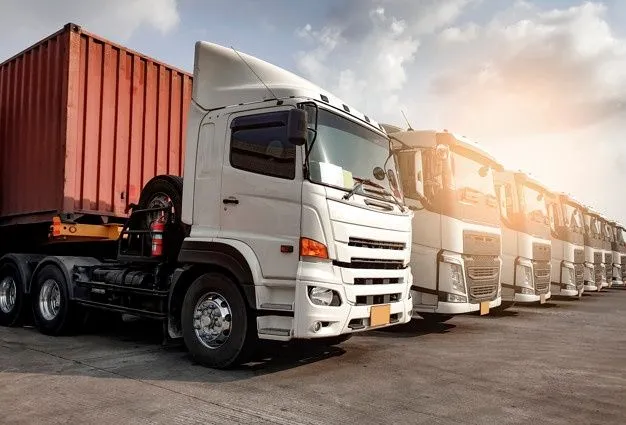
| Starting a logistics company in 2026 requires five core steps: choosing your logistics niche (freight brokerage, 3PL, trucking, freight forwarding, or customs brokerage), registering your business and obtaining the required licenses, setting up carrier relationships and operational infrastructure, pricing your services competitively, and building the digital presence that causes your first clients to find you. The logistics industry is growing at 6-9% annually and generated over $8.4 trillion in global revenue in 2024. Entry barriers are lower than most industries — a freight brokerage can be started for under $5,000, while an asset-based trucking operation requires $100,000 to $500,000 in initial capital depending on fleet size. |
| STEP 1 — CHOOSE YOUR NICHE |
The 5 Types of Logistics Business — Which One Is Right to Start?
The biggest mistake new logistics entrepreneurs make is starting a ‘logistics company’ without defining exactly which type of logistics business they are building. Each type has completely different capital requirements, licensing needs, operational demands, and client acquisition strategies. Choosing the wrong starting point wastes months and capital.
| Logistics Business Type | What You Do | Startup Capital | License Required | Time to First Revenue |
| Freight Brokerage | Connect shippers with carriers — earn margin on rate difference | $5,000-$25,000 | FMCSA Broker Authority (USA) — $300 | 2-4 weeks after licensing |
| Freight Forwarding | Arrange international shipments — manage documentation, customs, carriers | $15,000-$50,000 | OTI License (NVOCCor OTI) — varies | 1-3 months |
| Trucking / Carrier | Own and operate trucks — haul freight directly | $100,000-$500,000+ | FMCSA MC Number, DOT Number | As soon as trucks are operating |
| 3PL / Fulfillment | Warehouse and fulfill orders for e-commerce brands | $50,000-$200,000 | None required — business registration only | 1-3 months setup |
| Customs Brokerage | Clear imports/exports through customs for clients | $10,000-$30,000 | CHB License (USA) — requires exam | 3-6 months (license process) |
| 1.8M/mo ‘How to start logistics company’ searches Worldwide — entrepreneurs actively searching | $8.4T Global logistics market 2024 Growing 6-9% annually — massive opportunity | $5,000 Minimum startup cost Freight brokerage — lowest barrier entry point |
| STEP 2 — REGISTRATION AND LICENSING |
How to Register a Logistics Company — Licenses, Permits, and Legal Requirements
Business Registration
Register your logistics business as an LLC or corporation — not a sole proprietorship. The logistics industry involves significant liability exposure: cargo claims, accidents, customs penalties, and contractual disputes. An LLC separates your personal assets from business liabilities. Registration costs $50 to $500 depending on your state. An EIN (Employer Identification Number) from the IRS is free and required for business banking, hiring, and most carrier contracts.
USA — Freight Brokerage License (FMCSA)
To legally operate as a freight broker in the United States, you need Motor Carrier Authority from the Federal Motor Carrier Safety Administration. The application costs $300 and is submitted through the FMCSA’s Unified Registration System. You also need a $75,000 surety bond (BMC-84) or a trust fund agreement (BMC-85) — surety bonds typically cost $900 to $1,800 per year for new brokerages with no credit history. Processing takes 21 to 45 days after application submission.
USA — Trucking Authority (MC Number)
Operating as a for-hire motor carrier in the USA requires an MC (Motor Carrier) number and DOT number from the FMCSA. The application costs $300. You need minimum liability insurance of $750,000 for general freight or $1,000,000 for household goods movers. Processing takes 21 days. After approval, there is a mandatory 10-day waiting period before you can operate. New carriers must pass a DOT safety audit within 18 months of beginning operations.
UAE — Logistics Company Registration
Starting a logistics company in the UAE requires a trade license from the Department of Economic Development (DED) for mainland operations, or a free zone license if operating from Jebel Ali Free Zone, DAFZA, or another UAE free zone. Logistics and transport activities require a specific activity code on the trade license. Free zone setup typically costs AED 15,000 to 30,000 for a basic license. Mainland DED licenses with a local sponsor cost AED 20,000 to 50,000 depending on activity and location.
UK — Haulage and Freight Operator License
Operating a commercial vehicle over 3.5 tonnes in the UK requires an Operator License from the Traffic Commissioner. Standard National licenses permit UK-only operations; Standard International licenses permit EU operations. You need a transport manager with a Certificate of Professional Competence (CPC). Insurance minimum is £1 million public liability. Application takes 9 to 13 weeks.
| STEP 3 — OPERATIONS SETUP |
Setting Up Your Logistics Operations — What You Need Before Day One
Carrier Relationships — The Foundation of Any Logistics Business
A freight brokerage or forwarding company without carrier relationships is a phone number and a license. Building carrier relationships before your first customer call is essential. For freight brokers, register with load boards (DAT, Truckstop.io) and call carriers directly to introduce your brokerage and get added to their preferred broker lists. For freight forwarders, contact NVOCC operators, ocean carriers, and air cargo operators for rate agreements. For 3PLs, negotiate contracts with UPS, FedEx, and regional carriers for shipping rates.
Technology — What Software You Need
| Business Type | Required Technology | Monthly Cost | Why Essential |
| Freight Brokerage | TMS (Transport Management System) + load board access | $200-$800/mo | Manage loads, track shipments, store carrier data |
| Freight Forwarding | Freight management platform + customs filing software | $300-$1,200/mo | Documentation, tracking, customs compliance |
| Trucking | ELD (Electronic Logging Device) + dispatch software | $100-$400/mo | Legal requirement + load management |
| 3PL / Fulfillment | Warehouse Management System (WMS) + carrier integrations | $200-$1,000/mo | Inventory tracking, order fulfillment, client reporting |
Insurance — Non-Negotiable Requirements
Every logistics business needs specific insurance before operating. Freight brokers need contingent cargo insurance and professional liability. Trucking companies need commercial auto liability, cargo insurance, and general liability. 3PLs need warehouse legal liability and commercial general liability. Freight forwarders need errors and omissions insurance and cargo liability. Budget $3,000 to $15,000 annually depending on business type and volume.
| STEP 4 — PRICING |
How to Price Logistics Services — What to Charge and How to Stay Competitive
Freight Brokerage Margins
Freight brokers earn the spread between what they charge the shipper and what they pay the carrier. Standard gross margins in freight brokerage range from 12% to 20% on truckload freight. Specialized freight (hazmat, oversized, temperature-controlled) commands higher margins of 15% to 25%. A broker moving 10 loads per week at $2,500 average rate with 15% margin earns approximately $3,750 gross per week — $195,000 per year before operating expenses.
3PL Pricing Structure
3PLs charge a combination of receiving fees ($25-$50 per pallet), storage fees ($8-$25 per pallet per week), pick and pack fees ($2.50-$8.00 per order), and shipping at carrier rates plus markup. Setting prices requires understanding your facility costs per square foot, your labor cost per pick, and the carrier rates you have negotiated. Price below your competitors to win first clients, then raise rates as you build a track record and fill capacity.
Freight Forwarding Pricing
Freight forwarders mark up carrier rates (ocean, air, road) and charge handling and documentation fees. Ocean freight margins of 15% to 30% on freight charges are standard. Documentation fees of $100 to $300 per shipment cover bill of lading preparation, export/import filings, and certificate of origin. Air freight margins of 10% to 20% are typical. For new forwarders, competitive pricing is essential — win the first clients at thin margins to build the volume that earns better carrier rates.
| STEP 5 — GETTING YOUR FIRST CLIENTS |
How to Get Your First Logistics Clients — What Actually Works
The Fastest Method: Import Data Prospecting
Before your website ranks on Google, import data tools give you a direct path to potential clients. ImportYeti.com provides free access to US customs import data — every company importing goods into the USA is listed with their commodity, volume, and origin country. Filter for your specialty lanes and commodity types. Find the operations or logistics manager on LinkedIn. Send a specific, knowledgeable message referencing their actual freight pattern. This is warm prospecting — not cold calling — and converts at dramatically higher rates.
The Most Sustainable Method: Google Organic Search
The logistics companies that are never short of client inquiries are the ones that built organic search visibility before they needed it. A freight broker with five lane-specific pages ranking on Google page one receives inbound calls from shippers with active freight — no outbound effort required after the ranking is established. Building this organic presence takes 60 to 90 days from first content publication. Starting on day one of your logistics business — not after six months of struggling with cold outreach — is the right timing.
The Relationship Method: Industry Associations
Joining the logistics industry associations relevant to your specialty connects you with potential clients, referral partners, and carrier relationships simultaneously. For freight brokers: Transportation Intermediaries Association (TIA). For freight forwarders: FIATA member associations by country. For 3PLs: Warehousing Education and Research Council (WERC). For trucking: American Trucking Associations (ATA) or state trucking associations. These relationships convert slowly but produce high-quality, long-term client relationships.
| One of the first investments a new logistics company should make is in organic search visibility — because it is the only marketing channel that generates inbound client inquiries permanently without ongoing cost. Rankpy builds the lane pages, compliance content, and Google Business Profile optimization that rank logistics companies on Google page one within 45 to 90 days. If you are starting a logistics company and want clients finding you through Google from the beginning — request a free audit at rankpy. |
| COSTS SUMMARY |
How Much Does It Cost to Start a Logistics Company? Complete Breakdown
| Business Type | Licensing | Insurance (Year 1) | Technology (Year 1) | Working Capital | Total Range |
| Freight Brokerage | $300-$2,000 | $2,000-$5,000 | $2,400-$9,600 | $20,000-$50,000 | $25,000-$67,000 |
| Freight Forwarding | $500-$5,000 | $3,000-$8,000 | $3,600-$14,400 | $30,000-$100,000 | $37,000-$127,000 |
| Trucking (1 truck) | $300-$1,000 | $10,000-$20,000 | $1,200-$4,800 | $80,000-$150,000 | $91,000-$176,000 |
| 3PL (small) | $500-$2,000 | $5,000-$12,000 | $2,400-$12,000 | $50,000-$150,000 | $58,000-$176,000 |
| Customs Brokerage | $1,000-$3,000 | $3,000-$7,000 | $2,400-$8,400 | $20,000-$50,000 | $26,000-$68,000 |
FAQ
FAQs about Logistics Startups
Looking to learn more about SEO solutions for your business? Browse our FAQs:
To start a logistics company, choose your logistics niche (freight brokerage, trucking, 3PL, freight forwarding, or customs brokerage), register your business as an LLC, obtain the required operating licenses (FMCSA authority for brokers and truckers in the USA, OTI license for international freight), secure appropriate insurance, set up carrier relationships and technology, price your services competitively, and build digital visibility through a website with lane-specific pages that rank on Google when potential clients search for your services. |
The minimum to start a logistics company depends on the type: freight brokerage can be started for $25,000-$67,000 (including licensing, insurance, technology, and working capital), freight forwarding requires $37,000-$127,000, a single-truck trucking operation requires $91,000-$176,000, a small 3PL requires $58,000-$176,000, and a customs brokerage requires $26,000-$68,000. Freight brokerage has the lowest entry cost because it requires no physical assets — only licensing and working capital to pay carriers before collecting from shippers. |
Yes — most logistics business types require specific licenses. Freight brokers in the USA need FMCSA Motor Carrier Authority ($300) and a $75,000 surety bond. Trucking companies need FMCSA MC and DOT numbers plus commercial insurance. Customs brokers need a Customs House Broker license requiring a written exam. Freight forwarders handling international ocean freight need an OTI (Ocean Transportation Intermediary) license. 3PL warehousing businesses typically do not require specific federal licenses, only standard business registration. |
New logistics companies get their first clients most effectively through import data prospecting (using ImportYeti to identify shippers by commodity and lane, then reaching out on LinkedIn with specific, lane-relevant messages), direct carrier relationships that generate referrals, industry association networking, and organic search visibility through lane-specific website pages. Cold calling from generic lists produces low response rates. Specific outreach demonstrating knowledge of the prospect’s actual freight pattern converts significantly better. |
Freight brokerage has the highest profit-to-capital ratio of any logistics business type — margins of 12-20% on freight that you do not physically move, with startup costs under $30,000. Freight forwarding offers similar margins with slightly higher entry costs and more complexity. 3PL and trucking require more capital but can produce higher absolute revenue. The most profitable logistics business is the one in the niche where you have genuine expertise, carrier relationships, or market knowledge — because these advantages produce better rates and higher client retention than any other factor. |
A freight brokerage can generate first revenue within two to four weeks of obtaining FMCSA authority — the moment you have carriers and shippers. Freight forwarding typically takes one to three months to establish carrier agreements and process first shipments. Trucking generates revenue as soon as trucks are operating and loads are secured. The time to consistent, profitable revenue — not just first transactions — is typically three to six months for brokerages and forwarders, and six to twelve months for asset-based operations. |