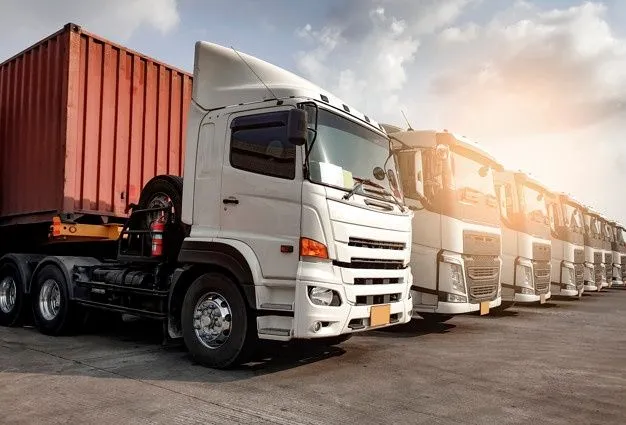
| Shipping costs for most businesses can be reduced by 15-35% without changing carriers or service levels through a combination of rate negotiation, packaging optimization, carrier diversification, shipping zone skipping, and better freight management. In 2026, the strategies that produce the largest savings differ by business type: e-commerce brands save most through carrier mix optimization and dimensional weight reduction; importers save most through port diversification and freight consolidation; manufacturers save most through mode selection and lane optimization. This guide covers 12 specific, actionable strategies organized by business type. |
| WHY SHIPPING COSTS ARE HIGH IN 2026 |
Why Shipping Costs Are Elevated in 2026 — And What You Can Control
Shipping costs in 2026 are elevated by factors both within and outside your control. The Strait of Hormuz crisis has added $1,500 per TEU in war risk surcharges on Middle East trades. US tariff changes have restructured import lanes, creating capacity imbalances. Fuel costs above $100 per barrel are flowing through to carrier rates. These macro factors affect every shipper equally — and there is little you can do about them in the short term.
What you can control is how efficiently you use the available carrier capacity, how well your packaging matches dimensional weight requirements, how aggressively you negotiate your carrier contracts, and how intelligently you select ports, routes, and freight modes. Most businesses have not optimized these variables — meaning significant savings are available to those who do.
The 12 strategies in this guide focus exclusively on actions within your control. Each one has produced documented savings for the type of business it targets. None require you to accept slower service or lower reliability — the best shipping cost reductions come from smarter buying, not worse service.
| 15-35% Typical shipping cost reduction achievable Without changing service levels or carriers | $1,500 War Risk Surcharge — Middle East trades 2026 Hapag-Lloyd — per TEU on UAE/Gulf bookings | 30% Average dimensional weight overpayment Most shippers pay 20-30% more than necessary |
| FOR E-COMMERCE BRANDS |
How E-Commerce Brands Reduce Shipping Costs — 4 Strategies
Strategy 1: Optimize Packaging for Dimensional Weight
Carriers charge based on dimensional weight (DIM weight) — the size of the package — when it is greater than actual weight. The formula is length × width × height divided by the carrier’s DIM factor (usually 139 for UPS and FedEx). A product that weighs 2 pounds but ships in an oversized box may be billed as 6 pounds. Most e-commerce brands are significantly overpaying because their packaging was chosen for protection rather than dimensional efficiency.
Audit your top 10 SKUs by shipping volume. Measure the actual product and compare it to the box you currently use. Work with a packaging supplier to right-size your boxes or switch to mailer bags where appropriate. For most e-commerce brands, packaging optimization alone reduces shipping costs by 10-20% on affected SKUs.
Strategy 2: Use a Multi-Carrier Approach
Most small and mid-size e-commerce brands use one carrier — usually UPS, FedEx, or USPS — for all shipments. This leaves money on the table. Different carriers have different zone strengths, package size sweet spots, and surcharge structures. A shipping software platform (EasyPost, ShipStation, Shippo) that rate-shops across multiple carriers at the time of label purchase consistently finds the lowest available rate for each specific shipment. Brands implementing multi-carrier rate shopping typically see 8-15% savings on shipping costs.
Strategy 3: Negotiate Volume Discounts Directly
If you ship more than 500 packages per month, you qualify for direct carrier negotiations beyond the standard account discount. UPS and FedEx both have account teams for mid-market shippers. The negotiation covers base rate discounts, dimensional weight divisor increases, and peak season surcharge caps. Most brands that negotiate for the first time discover they have been paying 15-25% more than necessary. A 3PL relationship also provides access to their negotiated carrier rates — which are typically lower than what individual brands can achieve.
Strategy 4: Use Zone-Based Inventory Placement
Shipping costs increase with each zone a package crosses between fulfillment center and customer. A package shipping from New Jersey to California crosses 8 zones and costs 60-80% more than the same package shipping from a Texas facility to California. If you have enough volume, split inventory between two strategically placed fulfillment centers — East Coast and West Coast — to keep most shipments within zones 2-4. This reduces average cost per shipment and transit time simultaneously.
| FOR IMPORTERS |
How Importers Reduce Shipping Costs — 4 Strategies
Strategy 5: Consolidate LCL Shipments to FCL
Less-than-container-load (LCL) shipments — where your cargo shares a container with other importers’ goods — are convenient but expensive per cubic meter compared to full container load (FCL). The crossover point where FCL becomes cheaper than LCL is typically around 10-12 cubic meters (CBM). If your regular shipment volumes approach this threshold, consolidating orders or coordinating with your supplier to ship larger quantities less frequently can generate significant savings.
Strategy 6: Diversify Your Port of Entry
Most importers default to Los Angeles/Long Beach or New York/New Jersey because their freight forwarder defaults to these ports. But East Coast ports have seen congestion and cost increases as volumes shift from West Coast. For cargo destined for the Southeast or Midwest, ports like Houston, Savannah, or Baltimore often offer lower total landed costs when drayage and rail costs are included. Ask your freight forwarder to model total landed cost through alternative ports for your primary trade lanes.
Strategy 7: Time Shipments to Avoid Peak Season Surcharges
Carrier peak season surcharges add $3-$8 per package (domestic) and significant premiums to ocean freight during Q4. For importers with flexible inventory cycles, bringing goods in during Q2 and Q3 — before peak season kicks in — avoids these surcharges and typically finds better carrier availability. The carrying cost of holding inventory purchased earlier is almost always less than the premium paid for peak season shipping.
Strategy 8: Benchmark Freight Rates Quarterly
Ocean freight spot rates change significantly quarter to quarter. Importers who locked in contracts a year ago may be paying above or below current market rates. Check spot market rates quarterly through platforms like Freightos or Xeneta and compare them to your contract rates. When spot rates fall below your contract, your forwarder may be willing to renegotiate — especially if you are a valued regular customer.
| FOR MANUFACTURERS |
How Manufacturers Reduce Shipping Costs — 4 Strategies
Strategy 9: Mode Optimization — When to Use Truck vs Rail vs Intermodal
Trucking is fast but expensive. Rail is slower but significantly cheaper for lanes over 500 miles. Intermodal — truck from origin to rail hub, rail for long distance, truck for final delivery — offers a cost-performance balance that works well for non-time-sensitive freight. For manufacturers with predictable outbound freight lanes, modeling each mode’s total cost including transit time value is often the highest-ROI shipping optimization available.
Strategy 10: Implement a Transportation Management System (TMS)
A TMS automates carrier selection, rate shopping, load optimization, and freight bill audit. For manufacturers shipping more than $500,000 per year in freight, a TMS typically pays for itself within 6-12 months through rate optimization and billing error recovery. Freight bills contain errors — missed discounts, incorrect assessorial charges, duplicate billing — at an average rate of 2-3% of total freight spend. A TMS with automated freight audit recovers this systematically.
Strategy 11: Consolidate Outbound Shipments
Multiple small LTL shipments to the same region, shipped on different days, cost significantly more than a single consolidated truckload shipment. For manufacturers with multiple customers in the same geographic area, a milk run or consolidation program — collecting multiple small shipments into a single truck — can reduce outbound freight costs by 20-40% on applicable lanes.
Strategy 12: Join a Shipping Cooperative or Group Program
Several industry associations and buying groups offer members access to negotiated carrier contracts at volumes far above what any individual manufacturer could achieve. NPTC (National Private Truck Council), industry-specific associations, and some chambers of commerce have freight programs. The negotiated rates available through these programs are sometimes lower than what a manufacturer five times larger can achieve independently.
| Logistics companies that help clients reduce shipping costs — freight forwarders with rate negotiation expertise, 3PLs with multi-carrier platforms, TMS providers — should be ranking for the searches importers and manufacturers make when looking for these solutions. Rankpy builds the content that ranks logistics companies for these buyer-intent searches. Free audit at rankpy.com. |
FAQ
FAQs about Reducing Shipping Cost
Looking to learn more about SEO solutions for your business? Browse our FAQs:
The most effective ways to reduce shipping costs depend on your business type. E-commerce brands save most through packaging optimization for dimensional weight, multi-carrier rate shopping, and volume negotiations with carriers. Importers save through freight consolidation (LCL to FCL), port diversification, and timing shipments to avoid peak season surcharges. Manufacturers save through mode optimization (truck vs rail vs intermodal), transportation management systems, and outbound shipment consolidation. Most businesses can reduce shipping costs by 15-35% without changing service levels. |
Shipping costs vary significantly by package size, weight, distance, carrier, and service level. For domestic US e-commerce parcels, typical rates range from $4-$8 for lightweight packages in zones 2-4, rising to $12-$20 for heavier packages in zones 7-8. For international ocean freight, rates range from $800-$3,000 per TEU in normal market conditions. In 2026, Middle East trades carry an additional $1,500 per TEU war risk surcharge. The best benchmark for your specific situation is a rate comparison across multiple carriers using current market data. |
Yes. Small businesses shipping more than 200-500 packages per month qualify for negotiated carrier rates directly with UPS and FedEx. Below this volume, the most effective approach is using a multi-carrier shipping platform (Shippo, EasyPost, Pirateship) that aggregates shipping volume across many small shippers to access rates typically available only to large shippers. Using a 3PL that has negotiated carrier contracts also provides access to volume-based rates regardless of your individual shipping volume. |
Dimensional weight (DIM weight) is a pricing method carriers use when the size of a package is greater than its actual weight. The formula is length × width × height divided by the carrier’s DIM factor (139 for most ground shipments). When DIM weight exceeds actual weight, you are billed at the DIM weight — meaning a 2-pound product in an oversized box may be billed as 6 or 8 pounds. Optimizing packaging to reduce DIM weight is one of the fastest and most impactful ways to reduce e-commerce shipping costs. |
To reduce international shipping costs: consolidate smaller LCL shipments into FCL when volume approaches 10-12 CBM; benchmark spot rates quarterly and compare them to your contract rates; evaluate alternative ports of entry for better total landed cost; time shipments to avoid peak season surcharges; use a freight forwarder with strong carrier relationships on your specific lanes; and consider slower transit modes (ocean vs air) for non-time-sensitive cargo. Working with a specialist freight forwarder for your trade lane typically produces better rates than a generalist. |