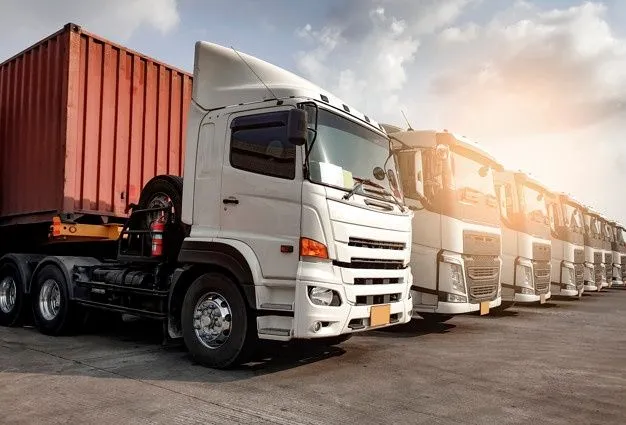
| Drayage is the short-distance transport of shipping containers between ports, rail yards, and warehouses. It is a critical link in intermodal freight chains. In 2026, drayage accounts for roughly 10% of total US freight spend and is the most congested segment of the supply chain. |
| $87B US Drayage Market 2026 Growing at 5.2% CAGR | 10-15% of Total Freight Cost Is drayage-related | 72hrs Avg Port Dwell Time USA Peak season 2025 data |
What is Drayage Trucking — and Why Does it Matter?
If you run a freight operation and you have ever heard someone complain that cargo is sitting at the port, you are dealing with a drayage problem. Drayage trucking is the short-haul movement of containers — usually under 100 miles — between ports, intermodal rail terminals, and distribution centers.
It sounds simple. Move a box from point A to point B. But drayage is where freight chains break down. Congestion, chassis shortages, port gate hours, appointment systems — these all live in the drayage segment. And if drayage fails, the rest of your supply chain backs up.
In 2026, the US drayage market is facing three simultaneous pressures: port congestion at LA/LB is back to near-2021 levels due to tariff front-loading, chassis availability is tighter than it has been in four years, and driver shortages in the drayage-specific segment are worse than in over-the-road trucking.
So if your logistics company, freight forwarder, or 3PL touches containers anywhere near a port or rail ramp, understanding drayage — and how to market drayage services — is more important than ever.
Types of Drayage — What Each One Means
Not all drayage is the same. Here is what the industry actually uses:
| Drayage Type | What it Means | Common Use Case |
| Port Drayage | Container moved from ocean terminal to nearby warehouse | Import cargo, LA/LB, NY/NJ, Houston |
| Inter-carrier Drayage | Container moved between two different carriers | Rail-to-truck handoffs |
| Intra-carrier Drayage | Container moved within same carrier’s facilities | Yard moves, terminal repositioning |
| Expedited Drayage | Rush movement, typically same-day | Time-sensitive pharma, retail flash orders |
| Rail Drayage | Container moved from rail ramp to final destination | BNSF/UP intermodal, Chicago, Memphis |
| Door-to-Door Drayage | Full service including final mile | E-commerce fulfillment, 3PL networks |
How Drayage Pricing Works in 2026
What Factors Determine Drayage Rates?
Drayage rates are not like standard truckload rates. They do not follow a simple per-mile formula. Here is what actually moves the needle:
- Port congestion surcharges — LA/LB added $350-$800 per container in peak 2025
- Chassis splits — when chassis is not co-located with container, split fees of $150-$400 apply
- Pier pass and clean truck fees — mandatory in California ports
- Waiting time — per-hour fees after free time expires (typically $75-$125/hour)
- Overweight fees — anything over 44,000 lbs triggers permit costs
- Hazmat handling — separate rate schedule for IMO cargo
| Route | Base Rate 2026 | Typical Surcharges | Total Estimate |
| LA Port to Inland Empire | $450-$650 | Pier pass $35, chassis $95 | $580-$780 |
| NJ Port to NJ Warehouse | $350-$550 | Clean truck $25 | $375-$575 |
| Houston Port to Houston DC | $300-$480 | Minimal | $300-$480 |
| Chicago Rail Ramp to Suburb | $280-$420 | Chassis split possible | $280-$570 |
| Savannah Port to Atlanta | $420-$600 | Chassis $85 common | $505-$685 |
Why Drayage Companies Are Invisible on Google — And What to Do
The SEO Problem Drayage Carriers Face
At Rankpy, we have analyzed dozens of drayage carrier websites. The pattern is consistent: strong operations, strong relationships, zero online visibility.
Most drayage carriers rely entirely on freight broker relationships and load board volume. Direct shipper accounts — where the real margin is — go to carriers who show up on Google when a shipping manager types ‘drayage company Los Angeles’ or ‘port drayage Houston.’
The good news: competition for drayage keywords is almost zero. Most carriers have no content at all. The first company to build port-specific, terminal-specific pages will own this traffic for years.
| Keyword | Monthly Searches | Competition | Opportunity |
| drayage company Los Angeles | 1,400/mo | Very Low | HIGH |
| port drayage Houston | 880/mo | Very Low | HIGH |
| drayage trucking Chicago | 720/mo | Low | HIGH |
| container drayage near me | 590/mo | Low | HIGH |
| drayage services Savannah | 390/mo | Very Low | VERY HIGH |
| intermodal drayage California | 480/mo | Low | HIGH |
| rail drayage Memphis | 260/mo | Very Low | VERY HIGH |
How to Build a Drayage SEO Strategy That Generates Direct Accounts
Step-by-Step: Ranking Your Drayage Company on Google
- Build port-specific pages — one page per port you serve. LA, LB, Houston, Savannah, NJ, Seattle. Each page targets ‘drayage [port city].’
- Build terminal-specific pages — APM, Everport, LBCT, GCT, Barbours Cut. Shippers search by terminal.
- Create chassis and equipment content — what chassis pools you use, your chassis availability track record.
- Add appointment system guides — how your company handles port appointments, TTMs, DCLI, TRAC.
- Publish weekly rate updates — Google News loves fresh pricing content, and shippers search for current rates.
- Build intermodal ramp pages — BNSF, UP, CSX, NS ramp locations you serve.
- Add driver and compliance content — TWIC, RFID, port authority certifications.
| THE RANKPY PERSPECTIVE In 2026, the drayage market is running a two-tier system. Carriers with direct shipper relationships charge $80-$120 more per move than broker-dependent carriers — because shippers pay a premium for reliability and direct communication. The carriers who get direct relationships are almost always the ones who show up on Google when the shipping manager does their vendor research. One port-specific page, updated weekly with rate data and appointment availability, is worth more than a $5,000 broker relationship. |
FAQ
FAQs about drayage in logistics?
Looking to learn more about SEO solutions for your business? Browse our FAQs:
Drayage is the short-distance transport of shipping containers, typically under 100 miles, between ports, rail yards, warehouses, and distribution centers. It connects ocean freight to inland supply chains and is essential for any business importing or exporting via container.
Standard trucking covers long-haul routes, often hundreds or thousands of miles. Drayage is specifically the short-haul movement of intermodal containers near ports and rail terminals. Drayage drivers typically work within a specific port zone and require TWIC cards and port authority certifications.
Drayage costs in 2026 range from $280 to $780 per container depending on the port, distance, chassis availability, and surcharges. LA/LB is the most expensive due to pier pass fees and congestion. Savannah and Houston are typically cheaper.
A chassis split occurs when the container and the chassis are not co-located at the same terminal. The drayage driver must pick up the chassis at one location and the container at another. Chassis splits add $150-$400 to the drayage cost and are common at congested ports.
Drayage is expensive because of port congestion fees, chassis shortages, driver waiting time, pier pass charges, and per-diem storage fees. In 2026, the LA/LB port complex remains the highest-cost drayage market due to congestion from tariff-driven import surges.
Rail drayage is the transport of containers between intermodal rail terminals (BNSF ramps, UP ramps, CSX ramps) and the final destination warehouse or distribution center. It connects railroads to the last mile and is common in Chicago, Memphis, Dallas, and Kansas City.
Drayage companies get more direct clients by building port-specific and terminal-specific pages on their website, publishing weekly rate updates, creating chassis availability content, and listing in freight directories. SEO generates inbound calls from shippers actively looking for drayage providers in specific ports.
The US drayage market is valued at approximately $87 billion in 2026, growing at 5.2% annually. The market is driven by import volume growth, intermodal freight expansion, and the shift from road-only to intermodal supply chains among large retailers and manufacturers.
Drayage drivers typically need a CDL Class A, a TWIC card (Transportation Worker Identification Credential), RFID transponders for port access, and port authority-specific credentials for terminals like APM, Everport, or GCT. Clean truck compliance is mandatory in California ports.
Drayage moves containers between freight nodes — port to warehouse. Last mile delivery moves smaller packages or freight from a distribution center to the end customer. They are different stages of the supply chain, though some 3PLs and carriers offer both services.