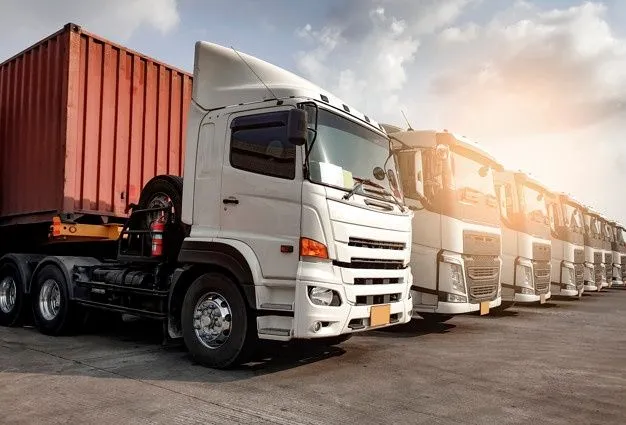
| The most effective strategies for getting more freight broker clients in 2026 are: lane ownership SEO (ranking your website for the specific lanes where you have carrier relationships), import data prospecting using tools like ImportYeti to identify shippers by commodity and lane, LinkedIn outreach to supply chain managers at target accounts, and Google Business Profile optimization for local shipper searches. Load boards and cold calling produce low-margin spot freight. Lane ownership through SEO and data prospecting produces direct shipper relationships with contracted margins. |
| THE REAL PROBLEM |
Why Most Freight Brokers Are Stuck on Low-Margin Spot Freight
There are over 17,000 licensed freight brokers in the United States. Almost all of them use the same playbook: post on DAT and Truckstop, cold call shippers from generic lists, attend industry events, and wait for referrals. This playbook produces a specific outcome — a book of business built on spot freight at thin margins, with no contracted lanes and no predictable revenue.
The brokers who break out of this cycle do something different. They identify the specific lanes and commodities where they have genuine carrier relationships and capacity. They build their marketing around those specifics. They target the shippers who regularly move freight on those lanes. And they use channels — SEO, import data, LinkedIn — that reach shippers at the moment they are actively looking for capacity or evaluating broker relationships.
This article covers every strategy that produces direct shipper relationships — not spot loads from load boards, but contracted lanes with shippers who call you first because you are the broker they trust for their specific freight.
| 17,000+ Licensed US freight brokers All competing for the same shipper relationships | $1,200/mo ‘How to get freight broker clients’ searches Every search is a broker looking for the same answer | 3-5x Margin difference Contracted lane vs spot freight on same lane |
| 7 STRATEGIES |
The 7 Strategies That Generate Direct Shipper Clients
Strategy 1: Lane Ownership SEO
Lane ownership SEO means building dedicated pages on your website for each primary lane where you have carrier relationships and capacity. A broker with strong carrier networks on the Texas-to-Midwest corridor builds a page targeting ‘freight broker Texas to Midwest,’ ‘flatbed carrier Texas to Indiana,’ and ‘spot freight Texas to Ohio.’ When shippers search for capacity on that lane, your website appears.
This works because shippers search by lane. A supply chain manager at a manufacturer in Houston who needs consistent flatbed capacity to Indiana does not search ‘freight broker.’ They search ‘flatbed carrier Texas to Indiana.’ The broker whose website ranks for that search gets the call — and that call is from a buyer with regular, contracted freight, not a one-time spot load.
| Lane Page Target | Monthly Searches | Buyer Profile | Competition |
| freight broker Texas to Midwest | 320/mo | Manufacturer with regular outbound freight | Very Low |
| flatbed carrier California | 480/mo | Construction, agriculture, oversized shipper | Low |
| reefer broker Southeast | 290/mo | Food, pharma, perishables shipper | Very Low |
| LTL freight broker Chicago | 380/mo | Manufacturer, distributor needing LTL capacity | Low |
| expedited freight broker | 540/mo | Any shipper with time-critical load | Low |
| hazmat freight broker | 390/mo | Chemical, industrial goods shipper | Very Low |
| oversized load broker | 420/mo | Heavy equipment, construction, energy shipper | Very Low |
Strategy 2: Import Data Prospecting
ImportYeti, Panjiva, and ImportGenius provide US customs import data showing every company importing goods into the US — including the commodity, the origin country, the port of entry, and the volume. This data lets you identify shippers who regularly import the commodities you move, on the lanes you cover, through the ports you know.
A broker specializing in LCL imports from China through Los Angeles uses ImportYeti to find every mid-size importer bringing goods through LA. They filter by commodity and volume, identify the supply chain manager or operations director on LinkedIn, and make contact with a message that demonstrates lane-specific knowledge. This is the difference between cold outreach and warm prospecting — the shipper knows immediately that you understand their freight.
Strategy 3: LinkedIn Outreach to Supply Chain Decision Makers
Supply chain managers, logistics directors, and procurement officers at manufacturing and retail companies are the buyers of freight brokerage services. Most of them are on LinkedIn. A targeted LinkedIn outreach campaign — 15 to 20 personalized connections per day to supply chain roles at companies in your target industries — produces two to five conversations per week with decision-makers who have actual freight.
The key is specificity. ‘I specialize in refrigerated freight for food brands from the Southeast to the Northeast — I noticed your company ships from Georgia. Would it be worth a call to see if I can offer better rates on that lane?’ converts. ‘Hi, I’m a freight broker looking to grow my book of business’ does not.
Strategy 4: Google Business Profile for Local Shipper Searches
Shippers search locally for freight brokers — particularly smaller manufacturers and distributors who want to work with brokers they can meet, call locally, and build a relationship with. A fully optimized GBP with your service area, weekly posts about lane capacity, and a review strategy from current clients produces consistent local shipper inquiries.
Strategy 5: Competitor Shipper Targeting
Every freight broker has competitors who service shippers on the same lanes. Load board postings, LinkedIn company pages, and industry association membership lists show you which brokers are active on your target lanes. Their shipper clients are your target prospects. Offer something specific — better rates on a specific lane, faster transit times on a specific corridor, dedicated capacity during peak season — and you give a shipper a reason to test you.
Strategy 6: Industry Association and Vertical Targeting
Joining the industry associations of the shippers you want to serve — not freight associations — puts you in the room with your target clients. A broker specializing in food and beverage freight joins the food industry association. A broker focusing on automotive parts joins the manufacturing association. These relationships convert to freight relationships because they are built on industry credibility, not broker credibility.
Strategy 7: Case Study Content for Mid-Funnel Shippers
A shipper evaluating freight brokers wants evidence. A case study showing a specific problem — ‘A food manufacturer was paying 23% over market rate on their Chicago-to-Southeast lane due to capacity constraints’ — and a specific solution — ‘We placed dedicated carrier relationships on the lane and reduced their rate by $1.40 per mile’ — does more work than any pitch deck.
| The freight brokers generating the best direct shipper relationships in 2026 are not the ones with the best pitch. They are the ones who appear when a shipper has a problem — on Google when they search for lane capacity, on LinkedIn when they evaluate broker options, and in industry associations when they discuss logistics challenges with peers. |
FAQ
FAQs about freight broker clients
Looking to learn more about SEO solutions for your business? Browse our FAQs:
Freight brokers get more direct shipper clients through lane ownership SEO (ranking for lane-specific searches shippers use), import data prospecting with tools like ImportYeti to identify shippers by commodity and lane, LinkedIn outreach to supply chain decision-makers at target companies, and Google Business Profile optimization for local shipper searches. Load boards produce spot freight. These strategies produce contracted lane relationships with direct shippers — which are worth three to five times the margin of spot loads on the same lane.
Lane ownership SEO means building dedicated website pages targeting the specific lane searches shippers use when looking for capacity — ‘freight broker Texas to Midwest,’ ‘flatbed carrier California to Arizona,’ ‘reefer broker Southeast.’ These pages rank for searches that come from shippers with regular freight on those lanes, producing inbound inquiries from buyers with contracted volume rather than one-time spot loads. A freight broker with strong carrier relationships on five lanes builds five lane pages and ranks for five different buyer-intent searches. |
Import data prospecting uses tools like ImportYeti, Panjiva, or ImportGenius to identify companies importing goods into the US — including commodity, origin country, port of entry, and volume. A freight broker uses this data to find shippers who regularly import goods on their target lanes, identifies the supply chain or logistics contact at each company on LinkedIn, and makes contact with outreach that demonstrates specific knowledge of their commodity and lane. This converts cold outreach into warm prospecting because the broker demonstrates lane-specific expertise before making contact. |
New freight brokers typically get their first direct shipper clients through load boards within the first 30 to 60 days — but these are usually spot loads at thin margins. Building direct shipper relationships through lane ownership SEO takes 60 to 90 days for first rankings and 3 to 4 months for consistent inbound inquiries. LinkedIn prospecting and import data targeting produce first conversations within 2 to 4 weeks if outreach volume is sufficient (15 to 20 targeted connections per day). A combination of all three channels is the fastest path to a diversified client base. |
The best freight broker marketing strategy combines lane ownership SEO for long-term inbound lead generation, import data prospecting for targeted warm outreach, and LinkedIn for direct relationship development with supply chain decision-makers. These three channels produce different types of leads that compound over time — SEO generates inbound buyers who found you, prospecting generates conversations with identified targets, and LinkedIn builds relationships that convert to freight over months rather than weeks. |