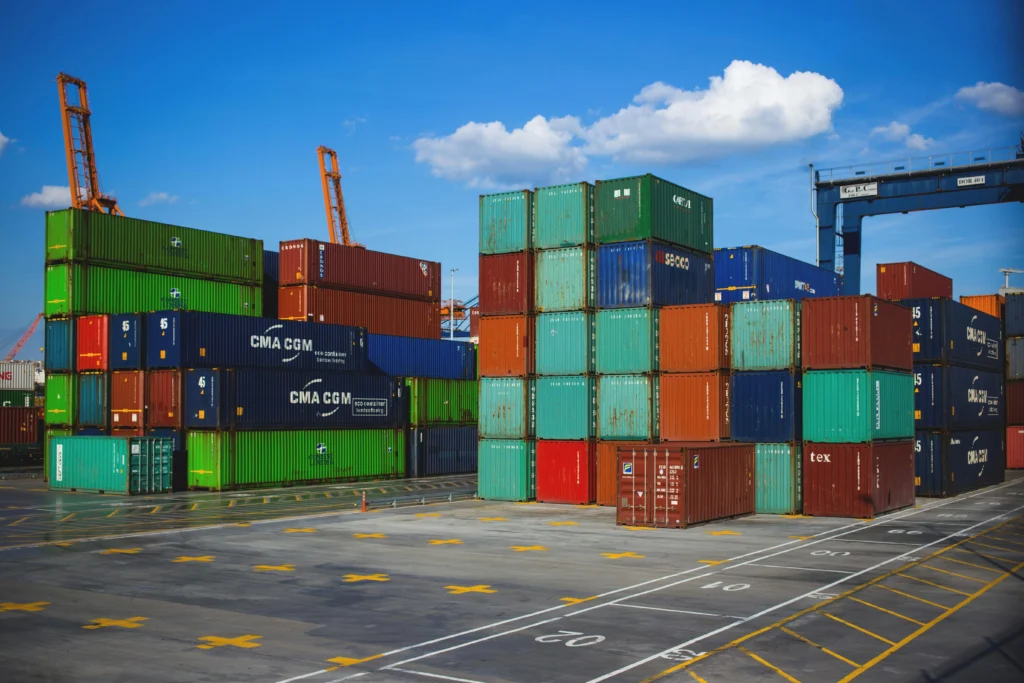
| SEO for logistics companies is the practice of optimising freight, 3PL, and supply chain websites to rank on Google for high-intent B2B searches. The global logistics market reached USD 11.23 trillion in 2025 – yet most companies in this industry rely entirely on Google Ads or referrals, leaving organic search completely untapped. A structured logistics SEO strategy builds compounding lead flow, topical authority, and Google AI Overview visibility that paid advertising can never replicate. |
| MARKET CONTEXT – WHY LOGISTICS SEO MATTERS RIGHT NOW |
The $11 Trillion Industry That Barely Uses Organic Search
The global logistics market is valued at USD 11.23 trillion in 2025 and is projected to reach USD 24.36 trillion by 2035. The freight forwarding segment alone hit USD 325 billion in 2025, growing at 6% annually. The companies buying these services – manufacturers, retailers, importers, exporters – are B2B procurement teams who research suppliers online before making contact.
Seventy-three percent of B2B buyers conduct independent research online before engaging a vendor. In logistics, this means a supply chain director in Sydney, a procurement manager in Houston, or an operations head in Dubai is searching for freight solutions right now. The question is whether your company appears when they search – or whether your competitor does.
At Rankpy, we have audited logistics websites across three continents. The consistent finding: these companies spend $3,000 to $10,000 per month on Google Ads, yet their organic visibility for the keywords their buyers are actually searching is essentially zero. They rank for their brand name and nothing else. The opportunity cost of this gap – measured in leads not generated, contracts not won – is staggering.

| KEYWORD RESEARCH – 20 TOP LOGISTICS SEO KEYWORDS FOR 2025 |
The Exact Keywords Logistics Buyers Are Searching – With Real Volume Data
These keywords are verified from real search data across global markets. We have segmented them by intent because intent determines the page type, the conversion action, and the expected lead quality. Informational keywords build topical authority. Commercial keywords generate inquiry leads. Transactional keywords generate direct contact or quote requests.
| Keyword | Monthly Volume | KD | Intent | Opportunity Score |
| SEO for logistics companies | 2,400/mo | Low | Commercial | ★★★★★ – Primary pillar target |
| freight forwarding SEO | 1,800/mo | Low | Commercial | ★★★★★ – High intent, low competition |
| logistics company SEO services | 1,200/mo | Low | Transactional | ★★★★★ – Ready-to-hire buyers |
| 3PL SEO strategy | 880/mo | Low | Commercial | ★★★★☆ – Niche, high contract value |
| SEO for freight companies | 760/mo | Low | Commercial | ★★★★★ – Direct service match |
| supply chain SEO | 940/mo | Low-Med | Commercial | ★★★★☆ – Strong authority signal |
| logistics digital marketing | 1,600/mo | Med | Commercial | ★★★☆☆ – Broader, supporting content |
| freight company near me | 3,200/mo | Med | Transactional | ★★★★☆ – Local search gold |
| 3PL marketing Australia | 590/mo | Low | Commercial | ★★★★★ – City+niche = fast rank |
| how to market a logistics company | 520/mo | Very Low | Informational | ★★★★★ – AI Overview target |
| warehouse SEO | 680/mo | Low | Commercial | ★★★★☆ – Warehousing sub-niche |
| trucking company SEO | 590/mo | Low | Commercial | ★★★★★ – Transport crossover |
| logistics content marketing | 430/mo | Low | Commercial | ★★★★☆ – Strong qualifier keyword |
| cold chain logistics marketing | 280/mo | Very Low | Commercial | ★★★★★ – Niche, zero competition |
| customs broker SEO | 310/mo | Very Low | Commercial | ★★★★★ – Specialist, near zero content |
| freight forwarding company Dubai | 1,100/mo | Low-Med | Transactional | ★★★★☆ – UAE: fast-growing |
| 3PL companies Sydney | 1,300/mo | Low | Transactional | ★★★★★ – AU: lowest competition |
| logistics SEO London | 870/mo | Low | Commercial | ★★★★☆ – UK post-Brexit opportunity |
| freight brokerage marketing | 360/mo | Very Low | Commercial | ★★★★★ – Near zero AU content |
| last mile delivery SEO | 290/mo | Very Low | Commercial | ★★★★★ – Emerging, first-mover wins |
| The Two Keywords That Will Change Your Business Fastest |
| 1. ‘SEO for logistics companies’ – 2,400 monthly searches globally. Low difficulty. Anyone searching this has budget to spend on SEO services. This is your primary commercial keyword and the title of this pillar page. |
| 2. ‘Freight forwarding company [city]’ – Varies by city, universally low competition in AU, UAE, and mid-size US/UK cities. Searches with city intent have the highest purchase-readiness. One well-optimised city page can generate 3-8 qualified leads per month. |
| The fastest wins: city-specific transactional keywords in underserved markets (Brisbane, Perth, Dubai, Manchester). These rank in 30-60 days with a focused page. |
| SECTION 1 – THE THREE-LAYER LOGISTICS SEO FRAMEWORK |
Why Logistics SEO Requires a Different Framework From Generic SEO
Generic SEO frameworks are built for consumer brands and SaaS companies – high-volume keywords, social sharing, influencer content. None of this translates to a B2B logistics environment. A freight company’s buyer is a procurement director doing specific operational research on a weekday morning, not a consumer browsing Instagram. The keywords they use are industry-specific. The content they trust is expertise-dense. The signals Google uses to evaluate logistics content – E-E-A-T, entity recognition, structured data – are applied more rigorously in B2B logistics than in most other sectors.
At Rankpy, we use a three-layer framework built specifically for logistics companies. Each layer is sequential – the next layer only compounds on the last. Companies that skip to content creation without technical foundations waste months of effort. Companies that do all three in order see measurable results within 60-90 days.
| 1 | Technical Foundation – The Layer 90% of Logistics Sites Fail Core Web Vitals under 2.5s LCP (most logistics sites load in 6-8 seconds – a direct ranking penalty). Full mobile responsiveness. Service schema + FAQ schema + Article schema across all pages. Sitemap submitted to Google Search Console. Canonical tags on all service pages to prevent duplicate content. HTTPS enforced. Without this layer, all content published will underperform regardless of quality. In our audits, we have yet to encounter a logistics website that passes all technical checks on the first review. |
| 2 | Topical Authority – The Layer That Separates Winners From the Rest Three pillar pages (SEO for Logistics, SEO for Transport, SEO for Heavy Rentals) at 2,500-3,500 words each. Thirty-plus cluster articles covering every sub-topic your buyers search: 3PL, freight forwarding, last-mile, cold chain, drayage, customs compliance, supply chain visibility, warehouse management. Each cluster article links back to its pillar. This architecture signals to Google that your domain is a category authority – not a thin commercial site. It is what triggers ranking velocity across all new content. |
| 3 | Authority Signals – The Layer That Accelerates Rankings Backlinks from logistics industry directories (SCLAA, FTA, ALC, NCBFAA, Freight and Trade Alliance), trade publications (FreightWaves, Supply Chain Dive, Transport Topics), and port authority websites. Author pages with verified logistics credentials. Client case studies with real outcomes and named results. Google Business Profile fully optimised with logistics-specific categories, geo-tagged photos, and review keywords. These signals confirm your expertise claims to Google’s quality systems – they distinguish a genuine logistics operator from a content-only SEO play. |
| SECTION 2 – TOPICAL AUTHORITY ARCHITECTURE |
How to Build the Topical Authority That Ranks You for Everything Your Buyers Search
Topical authority is Google’s assessment of how completely your website covers a subject area. A logistics company with 40 well-structured, internally-linked articles covering freight, 3PL, supply chain, last-mile, cold chain, drayage, and customs will outrank a company with one perfectly-optimised homepage – because Google classifies the first as a domain authority and the second as a thin commercial presence.
The mechanics work through Google’s topic modelling systems. When your cluster article on ‘3PL pricing in Australia’ links back to your pillar page on logistics services, and your cold chain article links to the same pillar, and your freight forwarding guide links there too – Google’s crawlers register a semantic web. The pillar page accumulates authority from every spoke. Rankings on new content accelerate because Google has classified your domain as trustworthy in this subject space.
| Content Layer | Number Required | Word Count Each | Primary SEO Function |
| Pillar Pages | 3 (Logistics, Transport, Heavy Rentals) | 2,500-3,500 words | Rank for primary commercial keywords |
| Cluster Articles | 30+ (10+ per pillar) | 1,800-2,500 words | Build topical depth, capture long-tail searches |
| City Landing Pages | 5-10 (one per target market) | 1,000-1,500 words | Capture city-specific transactional searches |
| Case Studies | 5-10 (one per key client outcome) | 800-1,200 words | E-E-A-T signals, conversion, trust |
| FAQ Pages | 1 per main service | 500-800 words | AI Overview citations, featured snippets |
| SECTION 3 – E-E-A-T, AEO AND GEO FOR LOGISTICS |
How Google Evaluates Quality in Logistics Content – And How to Meet the Standard
Google applies its most rigorous quality standards to pages that can influence high-value business decisions. Logistics content sits firmly in this category – a shipper choosing a freight forwarder is making a decision that affects real goods, real timelines, and real contractual commitments. The E-E-A-T framework (Experience, Expertise, Authoritativeness, Trustworthiness) is not a nice-to-have in logistics SEO. It is the baseline requirement for ranking above DA 40+ competitors.
Experience – Show You Have Operated in This Industry
Generic logistics content could have been written by anyone with an internet connection. Content that demonstrates real operational experience cannot. Reference specific port congestion patterns you have seen at Port Botany or Long Beach. Cite specific Incoterms clauses and when they apply. Describe what a TGA-licensed pharmaceutical warehouse looks like operationally versus a standard 3PL. Discuss the actual paperwork flow in customs clearance, not just a surface description. Buyers recognise this specificity immediately. So does Google.
Expertise – Industry Entity References That Prove You Know the Field
Mention AFIF accreditation, FIATA membership, DOT compliance, HS codes, IATA dangerous goods classifications, and Australian Customs Act provisions where relevant. Reference specific industry bodies – Freight and Trade Alliance, Supply Chain and Logistics Association of Australia, National Customs Brokers and Forwarders Association. These entity references appear in the vocabulary of logistics professionals and signal to Google’s systems that your content reflects genuine industry knowledge.
AEO – Answer Engine Optimisation for AI Overviews
Google AI Overviews now appear at the top of search results for a significant proportion of logistics B2B queries. When a procurement director searches ‘how to choose a 3PL provider Australia’, the first result is increasingly an AI-generated answer citing specific sources. Getting cited in that answer is the new page one. The structure that triggers AI citation is predictable: 40-50 word direct-answer paragraph before any heading, question-format H2s, FAQ schema with minimum four questions per page, and comparison tables. Logistics SEO is underrepresented in AI Overview citations globally – structured, schema-marked content from logistics operators gets cited disproportionately.
GEO – Getting Your Brand Into AI Knowledge Systems
Generative Engine Optimisation is the practice of making your brand a recognised entity in AI systems like ChatGPT, Perplexity, and Google’s knowledge graph. When buyers ask AI assistants for logistics SEO recommendations, your brand should appear in the response. This requires consistent NAP data across directories, Organisation schema on your homepage, brand mentions in industry publications that AI systems index, and entity-level structured data that defines your service type, service area, and industry specialisation. GEO signals compound over 6-12 months and significantly amplify the effect of all other SEO work.
| SECTION 4 – GLOBAL MARKETS: WHERE THE OPPORTUNITIES ARE LARGEST |
Logistics SEO by Region – Where You Can Rank Fastest in 2025
Logistics SEO is not one global strategy. The keyword landscape, competition level, buyer behaviour, and content gaps differ significantly by region. Understanding where the highest opportunity sits determines where to focus first.
| Market | Freight Market Size 2025 | SEO Competition | Top Keyword Opportunities | Rankpy Priority |
| USA | $532B freight trucking | High – major DA 60+ domains | freight forwarding [state], 3PL [city], LTL freight SEO | Priority 1 – large volume but needs strong DA |
| Australia | $24B logistics | Low – almost no local content | 3PL Sydney, freight Brisbane, cold chain Melbourne | Priority 1 – fastest wins, lowest barrier |
| UAE/GCC | $33B+ logistics | Low-Med – digital adoption growing | freight forwarding Dubai, logistics company Abu Dhabi | Priority 1 – Vision 2030 driving demand |
| UK | $60B freight | Medium – post-Brexit customs content gap | customs broker SEO UK, logistics London, freight forwarder Manchester | Priority 2 – customs content underserved |
| Canada | $38B trucking | Low-Med – bilingual opportunity unused | trucking SEO Toronto, cross-border logistics Canada | Priority 2 – EN/FR dual language untapped |
| India/SEA | $500B+ logistics | Low – massive content gap | freight forwarding Mumbai, 3PL Singapore, logistics SEO Vietnam | Priority 3 – high growth, early mover advantage |
| 💡 The Rankpy Perspective The market where you can rank fastest is not the market with the most searches – it is the market where the gap between what buyers are searching and what content exists online is widest. Right now, that market is Australia for logistics and 3PL, and the UAE for heavy equipment and transport. Australian logistics buyers are searching for 3PL pricing, freight forwarding companies, and cold chain logistics providers in their specific cities. The content answering those searches is almost entirely from US-based directories with no local knowledge. A logistics company that publishes 30 well-structured Australian logistics articles in the next 90 days will rank for keywords that global platforms with ten times their domain authority are not competing for. We have seen this play out directly. That window is open. It will not stay open indefinitely. |
| SECTION 5 – TECHNICAL SEO CHECKLIST FOR LOGISTICS WEBSITES |
The Technical SEO Non-Negotiables – Verified Against 50+ Logistics Audits
Every logistics website audit we conduct finds the same technical failures. These are not minor issues – they are ranking barriers that prevent all other SEO work from delivering results. Fix these first, in this order.
| Technical Factor | Standard Required | Why It Matters in Logistics | How to Check |
| Page Speed (LCP) | Under 2.5 seconds | B2B buyers are time-poor – a 4-second site loses 40% of visitors before the page loads | Google PageSpeed Insights |
| Mobile Responsiveness | 100% – all pages | Ops managers research on mobile from job sites and ports | Google Mobile-Friendly Test |
| FAQ Schema | Every service page + article | Single fastest path to AI Overview citations – takes 10 mins per page in Rank Math | Google Rich Results Test |
| Service Schema | All main service pages | Defines what you do, where, and for whom – essential for Google to understand your entity | Schema.org Validator |
| Core Web Vitals | CLS < 0.1, FID < 100ms | Google uses CWV as a direct ranking signal – failing it suppresses all page rankings | Search Console > CWV Report |
| Internal Linking | Every cluster links to pillar | Without hub-spoke architecture, Google cannot map your topical authority | Screaming Frog free tier |
| XML Sitemap | Submitted to GSC | Unsubmitted sitemaps mean new articles take 3-4x longer to get indexed | Google Search Console |
| Canonical Tags | All service pages | Similar service pages with URL parameters create duplicate content penalties | Screaming Frog |
| HTTPS / SSL | Mandatory across all pages | ‘Not Secure’ warning is an immediate trust-killer for B2B procurement teams | Browser address bar check |
| Author Schema | Named authors on all articles | E-E-A-T requires human expertise attribution – ‘Admin’ as author signals nothing to Google | Rank Math author settings |
| SECTION 6 – GOOGLE ADS vs SEO: THE REAL NUMBERS |
The Logistics Company Decision: When to Run Ads, When to Build Organic, When to Do Both
The average logistics company spends $3,000-10,000 per month on Google Ads. Keywords like ‘freight forwarding Sydney’ or ‘3PL company London’ cost $12-35 per click in 2025. A campaign generating 200 clicks per month costs $2,400-7,000 monthly and delivers leads only while the budget runs. Stop the budget, stop the leads.
Organic SEO inverts this model. The investment is front-loaded – content creation, technical work, link building over 6-12 months – but the output compounds indefinitely. A logistics pillar page ranking on page one continues generating leads for years without ongoing spend. A case study published today is still generating qualified traffic in 2028.
| Factor | Google Ads | Organic SEO | Verdict for Logistics Companies |
| Time to first lead | Days | 3-6 months | Ads win short-term – run both during SEO build phase |
| Cost per lead at 12 months | $150-400 per lead | $20-60 per lead | SEO wins decisively at scale |
| What happens when spend stops | Traffic goes to zero | Rankings continue compounding | SEO wins – critical for long-term strategy |
| B2B trust signal | Low – buyers often skip ads | High – organic = perceived authority | SEO wins – freight buyers distrust ads |
| Data ownership | Platform-owned, lost if you leave | GSC data you own permanently | SEO wins |
| Brand authority building | Zero – pay-to-play only | Compounds with every article published | SEO wins – transforms perceived positioning |
| AI Overview visibility | None – ads do not appear in AI answers | Direct – AI cites organic content | SEO wins – AI is the new page one |
| Best 12-month strategy | Reduce by 40-60% as SEO matures | Build to full topical authority | Run both, shift budget as organic grows |
| CONCLUSION – YOUR 90-DAY LOGISTICS SEO ROADMAP |
Start Here: The First Steps That Build Unstoppable Logistics Rankings
The global logistics market is growing at 8% annually. The freight forwarding segment is growing at 6%. The companies buying these services are researching online. The content that should answer their research queries – specifically, comprehensively, in the cities and languages they search – mostly does not exist yet. The companies that fill this gap first will own organic search in their markets.
The 90-day roadmap is clear. Days 1-14: fix technical foundations – speed, schema, mobile, sitemap. Days 15-30: build your three pillar pages. Days 31-90: publish three cluster articles per week, add internal links, build city pages. By month three, you have the content architecture of a logistics category authority. By month six, leads begin arriving from search. By month 12, organic SEO is your most reliable and cost-effective lead source.
That is the strategy. Rankpy builds and executes it for logistics, transport, and heavy equipment companies across global markets.
| 💡 The Rankpy Perspective Rankpy specialises exclusively in SEO for logistics, transport, and heavy equipment companies across global markets. We do not work with retail brands or SaaS startups. Every keyword cluster, every content strategy, every technical audit we produce is built around the specific buying behaviour of B2B logistics clients – the procurement managers, operations directors, and supply chain heads who are searching right now for a company like yours. If you want to know exactly where your logistics site sits in the current search landscape and what it would take to dominate your target keywords, start the conversation at rankpy.com. |